Artificial pet turf cleaning is the key to keeping a dog-friendly yard fresh, sanitary, and easy to enjoy every day. If you want to know how to clean dog turf, prevent bacteria buildup, and remove dog urine smell from artificial grass, the good news is that a simple routine usually does the job. With the right rinsing schedule, a pet-safe cleaner, and proper drainage, synthetic grass can stay clean and odor-free for years.
Artificial turf is popular with dog owners because it avoids muddy paws, patchy grass, and dead spots caused by repeated pet traffic. But while synthetic turf is easier to maintain than natural grass, it still benefits from regular care. Pet waste residue, hair, leaves, and infill dust can build up over time, especially in areas where dogs use the same spot every day.
Artificial Pet Turf Cleaning Guide for Dog Owners
Artificial pet turf is designed to provide a clean, durable, and low-maintenance surface for homes with dogs. Unlike natural lawns, synthetic grass does not become a mud pit after watering, and it does not develop bare patches from urine or active play. Still, regular cleaning helps keep the surface fresh, hygienic, and more comfortable for both pets and people.
At TURF PRO, we install pet turf systems with durable synthetic grass, fast-draining backing, and base layers built for easier maintenance. If you are planning a new yard, our artificial pet turf installation solutions are designed to reduce odor problems from the start.
Why Artificial Pet Turf Cleaning Is Important
Many homeowners assume rain or a quick hose-off is enough. While rinsing is a big part of maintenance, a complete artificial pet turf cleaning routine does more than wash the surface. It helps remove pet residue, protects air quality around the yard, and keeps the turf system working the way it was designed to work.
- Removes solid and liquid pet waste residue before it builds up
- Helps with pet turf odor removal in high-use potty zones
- Reduces bacteria, germs, and organic material trapped in infill
- Keeps the turf looking more natural and upright
- Extends the lifespan of the turf, seams, and infill system
How Dog Urine Affects Artificial Turf
Artificial grass fibers do not absorb dog urine the way soil and natural grass do. That is one reason dog owners prefer synthetic turf. However, urine can still leave odor behind if it collects in the infill or drains poorly into the base. Over time, repeated use in the same area can create an ammonia smell if the turf is not rinsed or treated with a cleaner.
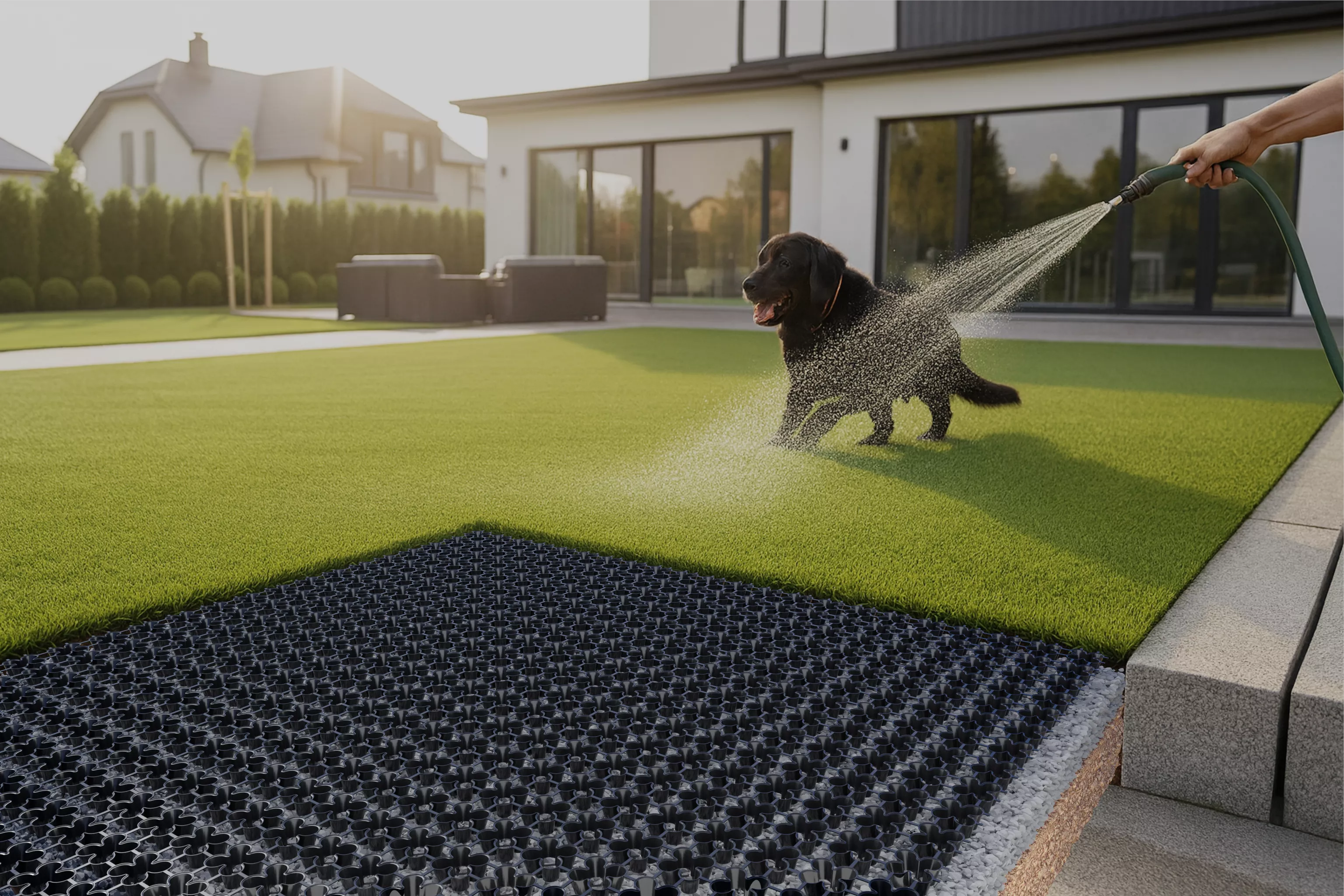
High-quality pet systems help prevent this problem with permeable backing, a crushed rock drainage base, and odor-control infill. A professionally built pet-friendly artificial turf installation drains quickly, which makes routine cleaning easier and helps reduce long-term odor issues.
How to Clean Artificial Pet Turf Step by Step
If you are wondering how to clean dog turf without damaging the fibers, the process is simple. You do not need harsh chemicals or power washing in most cases. A few basic tools and a regular schedule are usually enough.
Step 1: Remove Solid Pet Waste Quickly
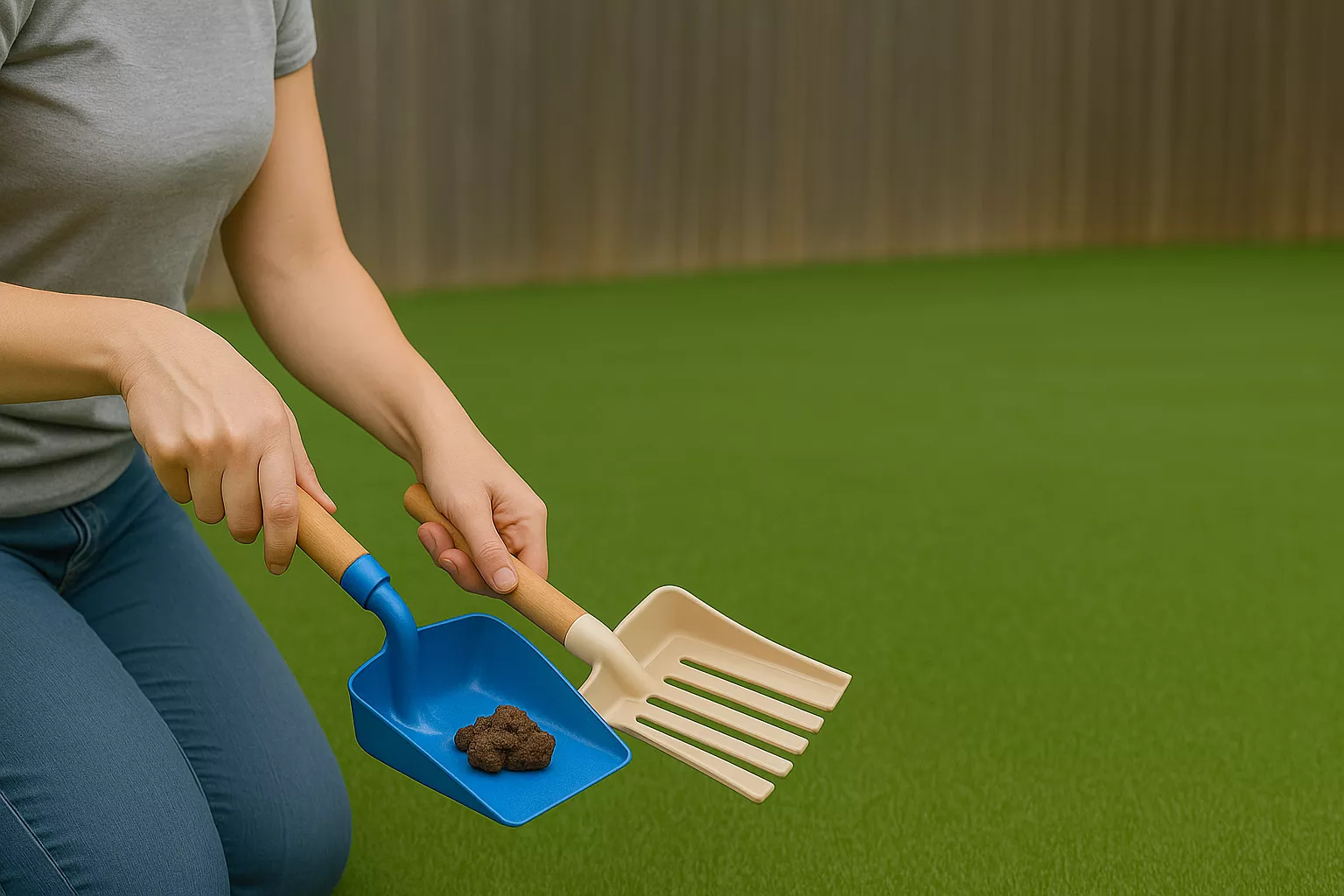
Pick up solid waste as soon as possible using a waste bag, scoop, or small shovel. Fast removal prevents bacteria growth and keeps debris from getting pushed deeper into the turf fibers. After removal, rinse the area lightly if any residue remains.
Step 2: Rinse High-Use Areas
Use a garden hose to flush urine residue through the turf backing and base. Focus on the areas your dog uses most often. In warm weather or with multiple dogs, rinsing several times per week can make a noticeable difference in odor control.
Step 3: Apply a Pet-Safe Cleaner
For deeper artificial pet turf cleaning, use a turf-safe enzyme cleaner or odor-neutralizing product. Spray it over the affected area, let it sit according to the product instructions, then rinse. Enzyme cleaners work especially well because they break down the organic compounds that cause lingering smells.
Step 4: Brush the Turf Fibers
Occasional brushing keeps blades upright and helps redistribute infill. Use a stiff broom or turf brush, then brush against the grain in flattened spots. This helps the lawn look better and can improve airflow through the turf surface.
Step 5: Clear Leaves and Debris
Leaves, pet hair, and dust can trap moisture and contribute to odor. Use a leaf blower, plastic rake, or soft broom to remove debris regularly. Keeping the surface clear supports drainage and keeps the turf easier to sanitize.
Best Cleaners for Artificial Pet Turf
Homeowners often ask what works best for pet turf odor removal. The answer depends on how heavily the area is used, but in most cases, enzyme-based formulas are the most effective. They are designed to break down waste instead of only covering up the smell.
- Enzyme cleaners: Best for breaking down organic waste and neutralizing odors
- Odor neutralizing sprays: Useful for quick refreshes between deep cleanings
- Mild vinegar solutions: Can help with light rinsing, but should be diluted and tested first
- Professional turf cleaners: Good for deep cleaning older or heavily used pet areas
Always choose products labeled safe for pets and synthetic turf. Avoid bleach, harsh disinfectants, and anything that could damage the turf backing or irritate your pet's paws.
How to Remove Dog Urine Smell from Artificial Grass
To remove dog urine smell from artificial grass, focus on the cause of the odor rather than the surface alone. Smells usually develop when urine residue stays in the infill or base without enough rinsing or microbial breakdown.
Rinse Problem Areas More Often
Dogs usually return to the same location. Extra rinsing in those areas helps move urine through the drainage system before odor develops.
Use an Enzyme-Based Cleaner
If the smell is already noticeable, apply an enzyme cleaner directly to the affected area. This is one of the most effective ways to remove dog urine smell from artificial grass without damaging the turf.
Check Drainage Performance
If odors return quickly after cleaning, the issue may be poor drainage or an older base layer that needs attention. Our guide to artificial pet turf maintenance covers the signs that your turf needs a more thorough service or maintenance check.
How Often Artificial Pet Turf Should Be Cleaned
The right cleaning frequency depends on the size of the yard, the number of dogs, and how often the space is used. A single small dog may only need light weekly rinsing, while a multi-dog household benefits from more frequent care.
- Daily: Remove solid waste and clear obvious messes
- Weekly: Rinse the turf surface, especially potty areas
- Monthly: Apply a pet-safe cleaner for deeper odor control
- Seasonally: Brush fibers, inspect infill, and deep clean if needed
Sticking to a routine is the simplest way to reduce smell and keep the surface fresh all year long.
Professional Artificial Turf Cleaning Services
Some yards need more than routine rinsing. If you have older turf, persistent pet odors, compacted infill, or a heavily used dog run, professional service may be worthwhile. A deep cleaning service can restore freshness and help extend the life of the installation.
- Deep deodorizing treatments
- Power brushing to lift matted fibers
- Infill redistribution and adjustment
- Bacteria and residue treatment in high-use zones
Installation Quality Matters for Easy Cleaning
The easiest yards to maintain usually start with the right installation. Fast drainage, a stable base, and pet-friendly infill all make artificial pet turf cleaning much more effective. If you are still comparing options, review artificial pet turf cost factors to understand why pet-specific materials and drainage prep matter.
For homeowners building a new dog-friendly yard, the right system can dramatically reduce cleanup time and help control odors from the beginning. Learn more about our pet-friendly artificial turf installation options for backyards, side yards, and dedicated pet runs.
Why Choose TURF PRO for Pet Turf Installation
TURF PRO installs synthetic turf systems built for real pet use. We focus on clean base preparation, proper drainage, and quality turf materials that stand up to repeated play and bathroom breaks.
- High-quality pet-friendly synthetic turf materials
- Professional drainage and base preparation
- Installation methods designed for easy cleaning
- Reliable guidance on odor control and maintenance
- Free consultations and project estimates
Get a Free Artificial Pet Turf Installation Quote
Artificial turf is one of the best landscaping solutions for homes with dogs because it stays cleaner, looks better, and requires less day-to-day work than natural grass. With the right maintenance routine, it can remain fresh and durable for many years.
If you are planning a new pet area or upgrading an older yard, TURF PRO can help you choose a system that is easier to clean and better at controlling odors. Contact our team today for a free consultation and estimate.
Artificial Pet Turf Cleaning FAQ
How do you clean artificial grass after dogs?
Remove solid waste regularly, rinse the turf with water, and use a pet-safe enzyme cleaner when deeper odor control is needed.
Does artificial turf smell from dog urine?
With proper drainage and regular rinsing, artificial turf usually does not develop strong odors. Smells are more common when urine builds up in the infill or base.
What is the best cleaner for pet turf?
Enzyme-based cleaners designed for synthetic turf are usually the best choice because they break down organic waste and neutralize odor instead of masking it.
How often should artificial pet turf be cleaned?
Most pet owners should remove waste daily, rinse weekly, and use a turf-safe cleaner monthly. Heavier-use areas may need more frequent rinsing.
Need a Cleaner Dog-Friendly Yard?
Get expert help with pet turf installation, drainage, and easy-maintenance solutions for your home.
Get Free Consultation