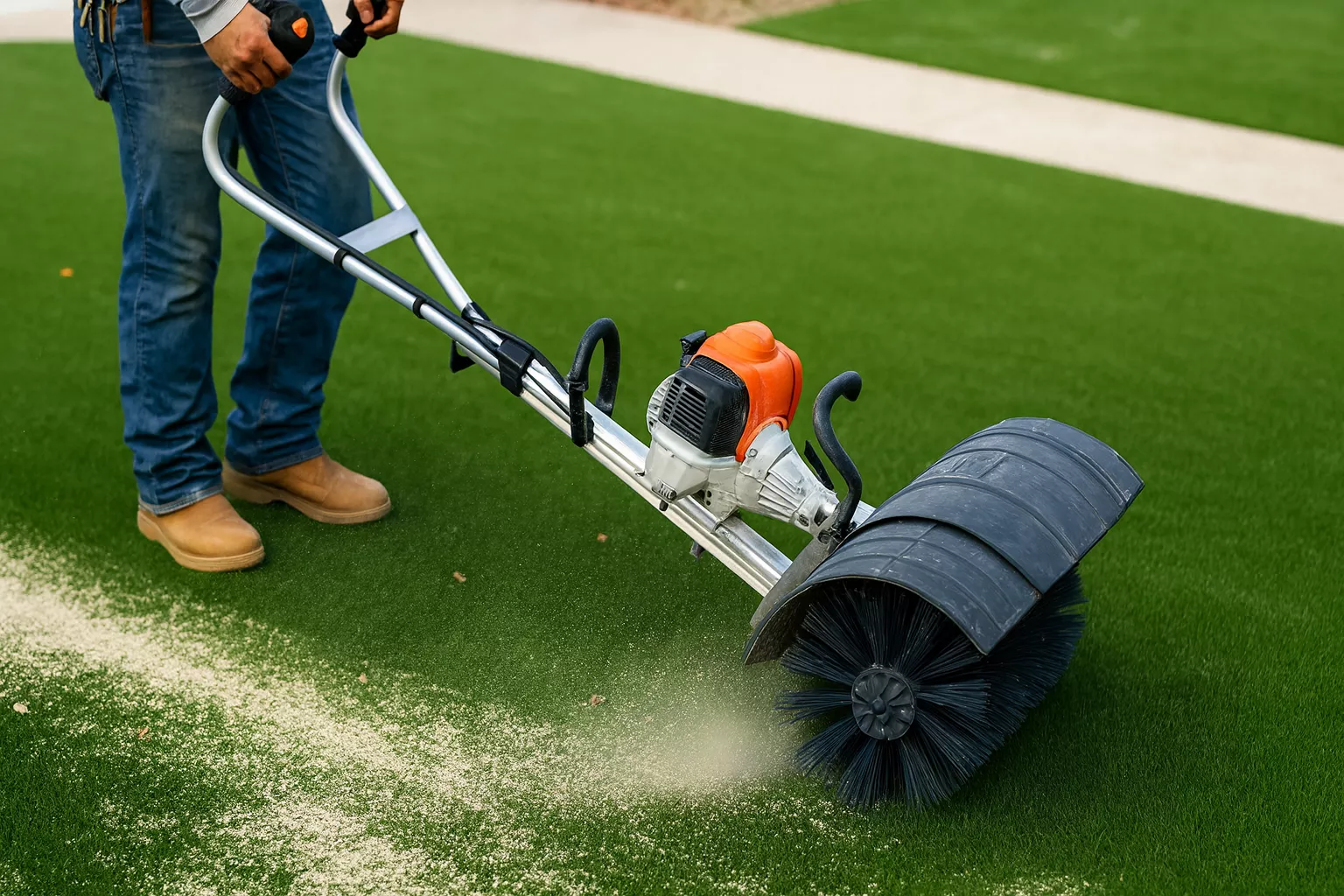
While artificial turf requires significantly less maintenance than natural grass, proper seasonal care ensures your investment looks beautiful and performs optimally year-round. Los Angeles' unique climate presents specific maintenance considerations that can extend your turf's lifespan and maintain its appearance.
Understanding how different seasons affect your artificial turf and implementing the right maintenance routine will keep your lawn looking pristine while maximizing its 15-20 year lifespan. Let's explore the essential maintenance tasks for each season in Los Angeles.
Spring Maintenance (March - May)
Spring is the perfect time for a thorough turf inspection and deep cleaning after the winter months.
Deep Cleaning and Inspection
- Power Washing: Use a pressure washer on low setting to remove accumulated debris
- Infill Redistribution: Brush and redistribute infill that may have settled
- Seam Inspection: Check all seams for separation or lifting
- Edge Securing: Ensure all edges are properly secured
- Drainage Check: Test drainage system with garden hose
Spring Cleaning Checklist
- Remove all debris (leaves, twigs, accumulated dirt)
- Rinse entire surface with garden hose
- Apply antimicrobial treatment if needed
- Brush fibers against the grain to restore upright position
- Check and clean drainage areas
- Inspect for any winter damage
Los Angeles Spring Considerations
Spring in Los Angeles often brings:
- Pollen Accumulation: Regular rinsing removes pollen buildup
- Occasional Rain: Check drainage performance after spring rains
- Increased Use: Prepare turf for more frequent use as weather improves
Summer Maintenance (June - August)
Summer is the most demanding season for artificial turf in Los Angeles, with intense heat and maximum usage.
Heat Management
- Regular Rinsing: Cool turf surface during peak heat hours
- Shade Considerations: Monitor areas with full sun exposure
- Infill Maintenance: Ensure adequate infill levels for heat dissipation
- UV Protection: Check for any signs of UV damage or fading
High-Traffic Area Care
Summer typically means more outdoor activities:
- Weekly Brushing: Brush high-traffic areas weekly
- Spot Cleaning: Address spills and stains immediately
- Infill Redistribution: Redistribute infill in compacted areas
- Edge Maintenance: Check edges for lifting due to expansion
Summer Cleaning Schedule
- Daily: Remove visible debris
- Weekly: Rinse entire surface, brush high-traffic areas
- Bi-weekly: Deep clean with mild detergent if needed
- Monthly: Professional inspection and maintenance
Fall Maintenance (September - November)
Fall preparation is crucial for maintaining turf condition through the cooler months.
Leaf and Debris Management
- Regular Removal: Remove leaves promptly to prevent staining
- Blower Use: Use leaf blower for efficient debris removal
- Gutter Cleaning: Ensure gutters don't overflow onto turf
- Tree Trimming: Trim overhanging branches to reduce debris
Pre-Winter Preparation
- Thorough cleaning and debris removal
- Deep brushing to restore fiber position
- Drainage system inspection and cleaning
- Seam and edge inspection
- Infill level check and redistribution
- Apply antimicrobial treatment
Fall Weather Considerations
Los Angeles fall weather patterns include:
- Santa Ana Winds: Increased debris accumulation
- Temperature Fluctuations: Monitor for expansion/contraction effects
- Reduced Daylight: Less UV exposure allows for deeper cleaning
Winter Maintenance (December - February)
Winter in Los Angeles is mild but requires specific maintenance attention.
Moisture Management
- Drainage Monitoring: Ensure proper drainage during rare heavy rains
- Mold Prevention: Increase air circulation in shaded areas
- Moisture Control: Address any standing water immediately
- Antimicrobial Treatment: Apply treatments to prevent bacterial growth
Reduced Maintenance Schedule
Winter allows for reduced maintenance frequency:
- Weekly: Basic debris removal and inspection
- Bi-weekly: Light brushing and spot cleaning
- Monthly: Thorough cleaning and maintenance check
- As Needed: Address weather-related issues promptly
Winter Project Time
Use the slower winter season for:
- Professional deep cleaning services
- Repair any identified issues
- Plan for spring improvements
- Equipment maintenance and replacement
Year-Round Maintenance Essentials
Weekly Tasks
- Remove visible debris and leaves
- Rinse high-traffic areas
- Brush against grain in compacted areas
- Check for and address any stains
Monthly Tasks
- Comprehensive cleaning with mild detergent
- Infill level inspection and redistribution
- Seam and edge inspection
- Drainage system check
- Overall condition assessment
Quarterly Tasks
- Professional deep cleaning
- Antimicrobial treatment application
- Comprehensive inspection for wear or damage
- Infill replacement if needed
Essential Maintenance Tools
Having the right tools makes maintenance easier and more effective:
Basic Tool Kit
- Stiff Brush: For regular brushing and debris removal
- Leaf Blower: Efficient debris removal
- Garden Hose: For rinsing and cleaning
- Mild Detergent: For deep cleaning
- Rake: For infill redistribution
Professional Tools
- Power Broom: For thorough brushing
- Pressure Washer: For deep cleaning (low pressure)
- Infill Spreader: For even infill distribution
- Seaming Iron: For repair work
Common Maintenance Mistakes to Avoid
- Using High Pressure: Can damage fibers and backing
- Harsh Chemicals: Avoid bleach and strong acids
- Metal Tools: Can cut or damage fibers
- Ignoring Drainage: Poor drainage leads to odors and damage
- Inadequate Brushing: Leads to matting and poor appearance
When to Call Professionals
While most maintenance can be done yourself, professional service is recommended for:
- Annual deep cleaning and inspection
- Seam repairs or re-seaming
- Infill replacement or upgrade
- Drainage system repairs
- Major stain removal
- Warranty-related issues
Cost-Effective Maintenance Tips
- Preventive Care: Regular maintenance prevents costly repairs
- DIY Basics: Handle routine cleaning yourself
- Professional Annual Service: Invest in yearly professional maintenance
- Quality Products: Use recommended cleaning products
- Prompt Attention: Address issues immediately to prevent escalation
- Budgeting: Understanding the cost of turf installation can help you budget for long-term care.
Environmental Considerations
Maintain your turf responsibly:
- Use eco-friendly cleaning products
- Conserve water during cleaning
- Properly dispose of removed debris
- Choose sustainable infill options
Conclusion
Proper seasonal maintenance ensures your artificial turf investment provides years of beauty and functionality. By following these guidelines and adapting them to Los Angeles' unique climate conditions, you'll maintain a pristine lawn that enhances your property value and provides endless enjoyment.
Remember that consistent, gentle care is more effective than infrequent intensive cleaning. When in doubt, consult with professionals who understand the specific requirements of your turf type and local conditions.
Maintenance for LA's Dry Climate
In Southern California, dust accumulation is more common than mud. A quick rinse every few weeks keeps your turf looking fresh. For deeper cleaning needs, our team is here to help.
Learn about our Professional Turf Cleaning Plans.
Frequently Asked Questions
How often should I clean my artificial turf?
For most homes in Los Angeles, a quick rinse once a month and deep cleaning once or twice a year is sufficient.
Can I use a pressure washer?
Yes, but use a wide-angle nozzle and keep it at least a foot away from the surface to avoid displacing infill or damaging fibers.
Need Professional Maintenance?
Our maintenance experts can keep your artificial turf looking perfect year-round with our comprehensive care programs.
Schedule Maintenance